 Use an ink pad, your fingerprints and a marker to create animals, people, trees, houses… even a whole neighborhood on paper.
Clean up with an alcohol prep pad.
Creative and fun!
You can do it – Here's how!
Month: July 2011
Use an ink pad, your fingerprints and a marker to create animals, people, trees, houses… even a whole neighborhood on paper.
Clean up with an alcohol prep pad.
Creative and fun!
Ok– I know you’ve seen the label that says 100% cotton.  But there are other plants that are used to make fabrics too. Here are some interesting facts about cotton and some others.
Cotton comes from plants that produce seed pods filled with ball-shaped clumps of cotton fiber. The seeds are separated from the cotton fiber mechanically. The process continues by spinning threads from the remaining, seedless white fiber. The threads are then woven to make cloth, which can be dyed. Cotton was grown in Pakistan’s Indus Valley more than 5,000 years ago. Cotton was grown and used to make clothing in ancient Egypt. Cotton plants were exported to the Southern United States in the 17th century.
Flax grows to a height of 4 feet and has leaves that consist of long, tough fibers. Flax has been used since ancient times to make clothing. The ancient Egyptians used flax to create linen cloth more than 4,000 years ago, and it was used in Medieval Europe to make cloth. Flax is still used to make fabrics for clothing, and it is commonly blended with synthetic materials and wool to add strength to fine yarns.
Hemp comes from the Cannabis sativa plant and has been used to make cloth since ancient times. In the 1980s, producers were able to make fine cloth suitable for clothing from hemp. This development occurred following the discovery of a process using enzymes that removed the fibers’ roughness while still allowing the fiber to retain its durability. Designers currently use hemp, blended with other textiles, to make fine cloth, in contemporary designs. Hemp fiber is resistant to stretching, which allows clothes made from cloth woven with hemp fibers to retain their shape and size. Hemp typically grows in warm climates, such as those found in tropical regions.
Ramie is grown in East Asia, and is known as China grass. Ramie fibers have been found in fabrics used to wrap mummies in ancient Egypt. Ramie fibers are fine and produce delicate silk-like threads when spun, although the fibers can become brittle when a dry process is used to spin them. Cloth made from Ramie is resistant to stain and has a slight sheen that reflects light. Ramie fabrics are also used in the manufacture of garments because the cloth does not readily shrink.
Use the PREGNANCY CALCULATOR to determine when baby will arrive. 
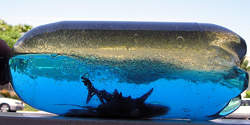
Here’s a science project that doubles as a fun craft. Create your very own ocean waves in a plastic soda bottle. Display for all your friends to see!
 Do It And How