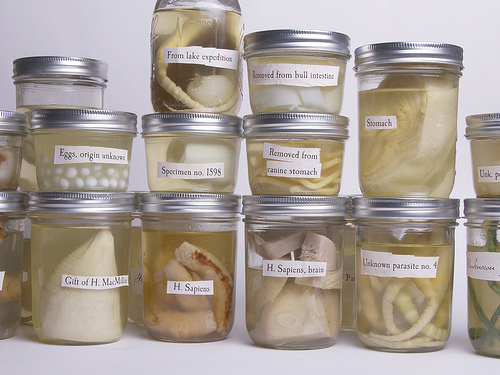
Before we begin, let’s be clear about what we’re trying to accomplish, with a few ground rules for the project:
1. What good is a specimen jar if you can’t serve it at dinner?The contents of the jars should be genuinely edible, made out of real food. Plastic snakes and spiders are right out.
2. Make it tasty. While the appearanceof the specimen jars may cause loss of appetite, the scent, by contrast, should be simply mouth watering. There are many ways to get there. Specimen jars can be prepared as an antipasto course (e.g., with preserved vegetables), as a soup appetizer, as a palate cleanser between courses, or a dessert course, depending on the ingredients chosen.
3. Work within the comfort zone of your guests. If your guests are super-omnivores, eager to eat the most challenging ingredients that you can get your hands on– whether that’s brains or balut or something far worse –then go right ahead. However, the point of this project is to make a dish that looks intimidating but actually consists of friendly ingredients. It’s possible to make a truly scary looking set of specimen jars that is (for example) strictly vegan or passes the even stricter dietary requirements that your child may present.
 Do It And How