Year: 2011

Glass Etching

Make sure you wear latex gloves when working with etching cream; a long sleeve shirt and eye protection are also a good idea. Make sure the area you are working in is well-ventilated and the work surface is covered. The etching cream is an acid and it will etch anything it comes in contact with.

Clean your glass using window cleaner. Make sure it is dry and free of all dust and lint.

If you do not have a premade stencil: Cut a piece of contact paper at least a few inches larger than your pattern.

Place the contact paper on your glass where you want the etching to be; smooth out all air bubbles.

Place the carbon paper over the contact paper and then place the pattern over the carbon paper (secure these with a few, small pieces of masking tape if you like).

Trace your pattern onto the contact paper. Once done, remove the pattern and carbon paper.

Using a sharp utility knife cut all the details out of the contact paper. Remove pieces of the contact paper so only the sections of the glass that you want etched are exposed.

Make sure that all of the edges of the remaining pieces of contact paper are stuck tightly to the glass.
Put on the latex gloves. Use a foam brush to spread a thick layer of etching cream onto the exposed sections of your design (you can also use a paper towel). Be generous with the etching cream; if it is applied to thinly, your pattern could look uneven or streaked!
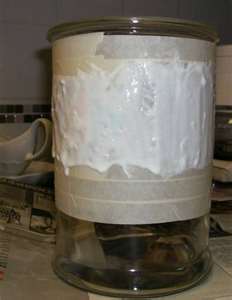
Set your glass in a safe spot and wait the amount of time required for the brand of etching cream you are using (this can vary, usually from 5 to 15 minutes).

After the prescribed amount of time, remove the etching cream usually by running water over it. Again, read the specific instructions for the brand of etching cream you purchased.

Once the cream is washed off you can remove the contact paper to reveal your design. Wash your glass and you are done!

Instructions via

Start Your Own Bee Hive


You’ll need:

Top Feeder – A gallon can with small holes in the cap that fits into a hole drilled into the hive’s cover, into which syrup (2 parts water and 1 part sugar) is poured. The syrup gives them the energy to build the wax honeycomb.


Spray bottle – Fill it with syrup. Do not reuse an older spray bottle if it has been used with other chemicals. Bees are very sensitive.


Queen Catcher – This makes catching the queen a lot gentler on her. No one wants a ticked off queen bee, especially a bee keeper. And I have to say, living in San Francisco, the term “queen catcher” conjures up many different images.


Bee Hives – Now the one place you don’t want to skimp on is hive boxes. Get a few, at least three, because you never know when you are going to need an extra one. But when you do, you need it immediately and not a moment later. So having a few on hand will save you a lot of grief in those moments.


Bottom board – wooden stand on which the hive rests. Set bottom board on bricks or concrete blocks to keep it off the ground.


Extractor – It would be nice to have one of these but they are quite pricy. I suggest you go in on one with other beekeepers in your area or see if you can rent one.


Queen Muff – Yes, I said muff. After catching the queen, put her in the muff and as to not worry about her flying off.


Bees – Obtaining bees is not necessarily easy but it is a lot easier than you think it will be. You can get them off of Craigslist or just check for bee forums in your area. Lot’s of beekeeping enthusiasts come across swarms they are always trying to unload. Of course, this requires some planning and a bit of serendipity as the perfect time for starting a hive is in the spring.


A common type and amount of bees to order is a 3 pound package with an Italian queen. For a few dollars extra, you can have your queen marked. It is a good idea to have your queen marked. Since they will come in the mail (yes, in the mail) you will want to notify your local post office about them.


There are three types of bees: the queen, the worker and the drone.


Queen bees – The queen’s sole purpose is to lay eggs, that is all she does. Heck, she doesn’t even feed herself. She is like some self-indulging Roman emperor, just lying around being fed grapes all day long by the worker bees. I mean, they do all the work! They even get rid of her waste (eww!). During the height of laying season, the queen can produce around 1000 eggs a day.


Worker bees – Worker bees are sterile female bees. And all they do, as their name implies, is work.


Drone bees – Guys, be thankful you are not a bee. Like most guys, all these bees do is eat and think about sex. Their job is to get jiggy with the queen, that is it. But it isn’t as sexy as it sounds. If a drone is lucky enough to mate, the queen bee rips out his sexual organs during coitus and stores the sperm for future use. He then falls to the ground and dies. If he isn’t fortunate to find a queen to mate with, the worker bees will force him out of the hive come winter, as he is no longer deemed useful.


 Check out this very informative website for more info and instructions.

French Fry Soup

potato-soup

INGREDIENTS:

1/4 lb chopped bacon
1/4 cup butter
1/2 cup diced onion
3/8 cup flour
4 cups hot water
2 Tbs chicken Bouillon
1/4 cup potato flakes
1 whipping cream
1/2 lb frozen french fries, baked and cut up
1 Tbs chopped fresh basil
1 Tbs chopped fresh parsley
Pinch pepper
Dash of tabasco or other hot sauce

DIRECTIONS:

Fry bacon in heavy soup pot until medium done. Drain the oil. Then add onion and butter until onions are tender. Turn down to low and add flour. Cook for 5 minutes stirring constantly. Combine chicken bouillon and water. Add half of bouillon and stir with a wisk until thickened. Add remaining bouillon, bring to a boil, turn down heat and cover. Slow simmer for 45 minutes stirring often. Then add potato flakes and stir until dissolved. Add cream and simmer for 10 minutes. Add the fries and spices and remove from heat.
via: http://www.callmecook.com/?p=724 Originally titled Baked Potato Soup – I’ve taken the liberty of re-naming this soup recipe! It is what it is, and it sounds super yummy!

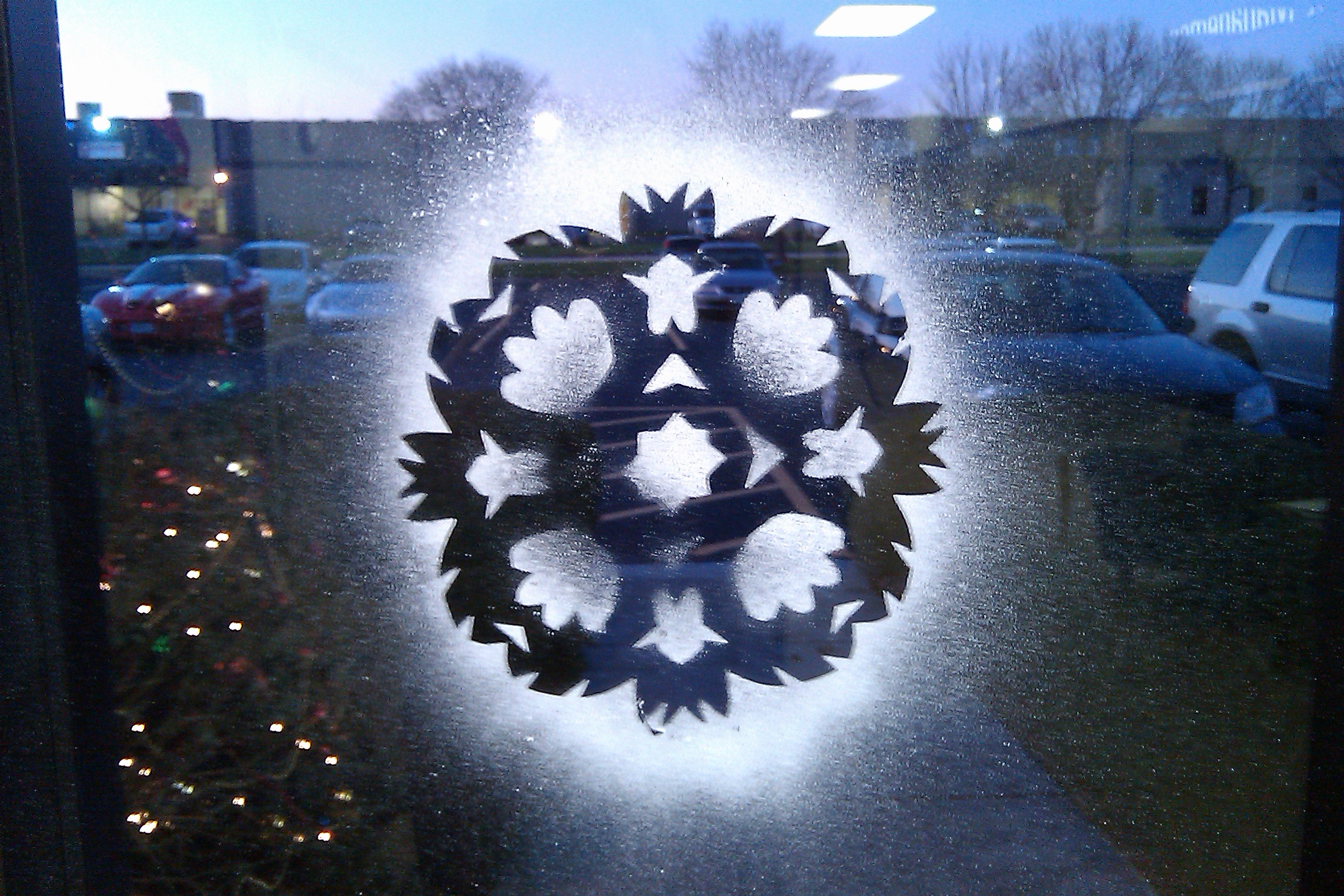
Window Snowflakes

A DoItAndHow Original Idea! Looks great at home or at work!

You’ll need:

  • Paper
  • Scissors
  • Tape
  • Spray Snow

Directions: Cut out a paper snowflake. Use paper that you would have recycled anyway.

Roll a couple of pieces of tape and secure snowflake to window, make sure you cant see the tape thru any holes in the snowflake.

Using spray snow, spray a cirle shape, starting at center of snowflake, working your way out. Try not to leave an obvious circle of snow around the flake.This might take some practice, but you’ll get the hang of it.

Important: Gently, carefully remove the paper, immediately after spraying. The spray snow will wet the paper and it will droop and ruin the design if you wait too long. Discard paper snowflake. Enjoy the compliments!