Category: Animals

Toilet Train Your Cat

Move the cat’s litter box so it is right next to the toilet, keep it like this for about a day.
Then gradually raise the litter box up by placing phone books (or something similar) under it. Repeat daily until the box is of equal height to the toilet. Whenever you raise the box take a little bit of the litter out of the box. You may need to secure the litter box to the phone books or whatever it’s sitting on so that it doesn’t move when the cat jumps onto it.

Move the box over 1 inch onto the seat. Repeat daily until the box is directly over the seat. Continue gradually decreasing the amount of litter in the box until there is only a thin layer (less than 1 inch) of it left.4Replace the litter box with a “training box”. You have a few different options here, but the important thing to remember is to make sure the “training box” can hold your cat’s weight if they step or jump onto it:
Lift the toilet seat and tape a piece of wax paper over the hole so that the toilet looks like a drum. Lower the seat over the wax paper. Add flushable litter.
Lift the toilet seat and tape a bowl or aluminum pan to the edges. Put the seat down so that it holds the bowl in place. (See video below.) Add flushable litter.
Use a commercial training device, sold specifically for this purpose. via
Socktopus


What You’ll Need:

Cotton thread for sewing
Embroidery needle
Embroidery thread
Four Ladies’ trouser socks of the same size
Polyester fiberfill or cotton alternative (Michaels.com)
Ribbon
Scissors
Sewing needle
Optional: 2-inch diameter circle of felt

First, cut up four socks
Before you cut, wash the socks to make them nice and soft.

1. Turn one sock inside out. Cut it down the middle through both layers, leaving 1⁄3 of the length intact at the toe end. This sock will form the head and two legs.

2. Turn the other three socks inside out, and cut the toes off of them. Then, cut all of them in half lengthwise through both layers to form two strips from each sock.

Next, sew and assemble the head and legs
To sew the legs, you can hand stitch or use a sewing machine. If you choose to hand stitch,
use a backstitch.

1. Sew the legs on the sock that forms the head. Fold each strip in half lengthwise, and sew along the long edge and the short open edge with a 1/4 inch seam allowance. Trim the threads, and tuck in any remaining fabric. Leave an opening at the bottom (by the “head”) for stuffing.


2. Turn the sock right-side out, and stuff the legs with polyester fiberfill.Make sure that they are stuffed evenly. Then, stuff the head, and hand-sew the opening at the bottom closed.


3. Sew each of the remaining six legs closed.Leave one end open for stuffing, and sew with a 1⁄4-inch seam allowance. Then trim the threads, and tuck in any remaining fabric.


4. Turn each leg right-side out.
Stuff each leg, and hand-sew the ends shut.


5. Attach the rest of the legs.Sew the legs to the base of the head.


Finally, adorn the Socktopus
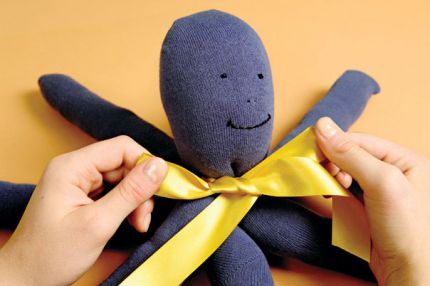
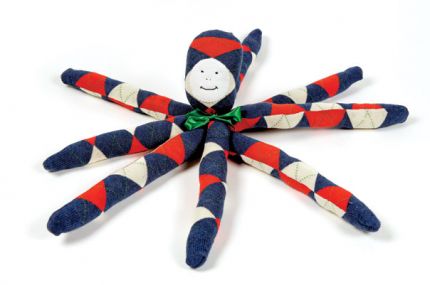
If your socks have a very busy pattern, you might want to sew a felt oval to the head, as shown top right, before you embroider the face. Here, I embroidered the face directly on the sock.
via

Beer Birds

This has to be one of the easiest recipes around. You simply take a full opened can of beer, stand a chicken on it, and throw it on the barbeque (well – don’t literally throw it – that could be very messy!) The beer can is inserted in the neck area (where you would normally stuff the chicken) and stood upright. While the chicken cooks, the beer heats up and subtly flavors the meat. You end up with a tasty and surprisingly moist chicken. You should also rub a little olive oil over the chicken and salt and pepper it before starting. If you have a favorite “rub” you can add that too. Oh – make sure you drink half of the can first – it should be half full when starting out. I am sure you will have no trouble finding someone to help you with that part of the recipe. Cook the chicken with the BBQ lid on for approximately 1 1/4 hours or until the internal temperature registers 165 degrees F in the breast area and 180 degrees F in the thigh (or the juices run clear if you pierce it with a knife).

Mail Your Turtle

Ok, this may seem like a weird DoIt AndHow entry, but if you have to move or need to get your turtle to a different location. Here’s how to do it.

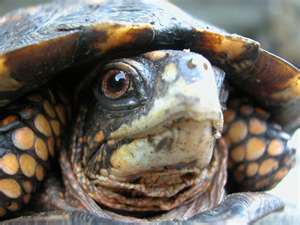
  • Turtles — the easiest pet to transport — can be mailed overnight. Pack them in well-cushioned Styrofoam boxes with air holes and lined with soft grass or leaves. The box should not be so tight that the turtle cannot extend its legs or head. Write “FRAGILE. LIVE ANIMAL” and “THIS SIDE UP” on the box. Keep the surroundings moist, but not wet, by dampening a cloth and placing it inside the container.

Here’s how to move the other stuff in your life: from Atlas

Edible Specimins

Before we begin, let’s be clear about what we’re trying to accomplish, with a few ground rules for the project:

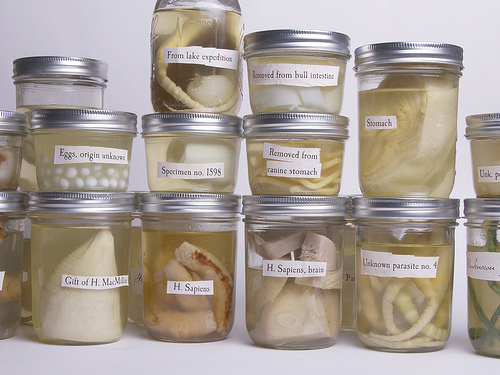
1. What good is a specimen jar if you can’t serve it at dinner?The contents of the jars should be genuinely edible, made out of real food. Plastic snakes and spiders are right out.

2. Make it tasty. While the appearanceof the specimen jars may cause loss of appetite, the scent, by contrast, should be simply mouth watering. There are many ways to get there. Specimen jars can be prepared as an antipasto course (e.g., with preserved vegetables), as a soup appetizer, as a palate cleanser between courses, or a dessert course, depending on the ingredients chosen.

3. Work within the comfort zone of your guests. If your guests are super-omnivores, eager to eat the most challenging ingredients that you can get your hands on– whether that’s brains or balut or something far worse –then go right ahead. However, the point of this project is to make a dish that looks intimidating but actually consists of friendly ingredients. It’s possible to make a truly scary looking set of specimen jars that is (for example) strictly vegan or passes the even stricter dietary requirements that your child may present.