Category: Animals

Treat a Bee Sting in 1, 2, 3

1. Get the stinger out quickly!

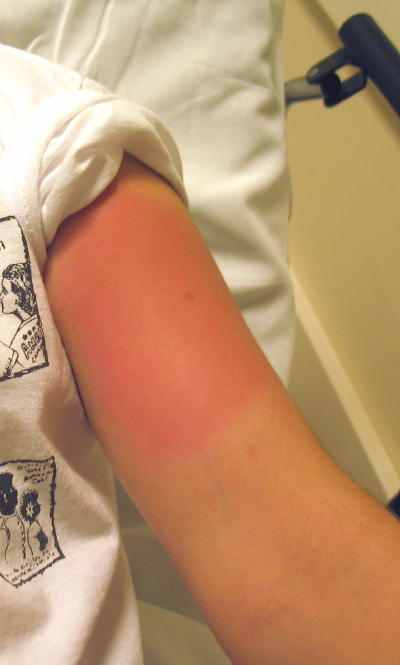
First you must find the stinger, look for a raised red welt on the skin of the victim. Now look very carefully for a small black dot in the center of the welt, it will look rather like a very tiny splinter. If the victim has been stung more than once, continue checking all of the welts until you find the stinger, or stingers.

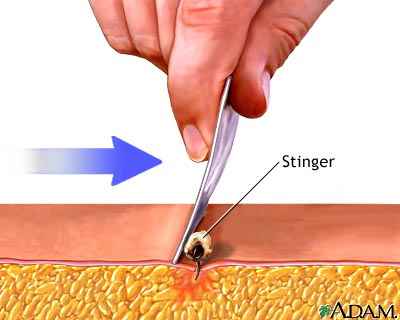
After you have quickly located the stinger, pull it out as quickly as possible use either tweezers, or a stiff, flat object, such as a credit card, and pull or scrape out the stinger. This is imperative to get the stinger to quit pumping venom into your system.


2. Check for allergies!

 If you are just a by-stander here, be sure to ask the stinging victim if they have allergic reactions to bee stings. If so, find out if they have a bee sting or anaphylaxis kit. Generally people that are allergic to bee stings carry one of these kits fairly close by. If a kit is available, follow the instructions which will be displayed on the kit. If no kit is available, immediately call an ambulance. It is better to call an ambulance instead of trying to get the victim to the hospital yourself, unless of course you are within minutes of a hospital. The paramedics on the ambulance will be able to give medication to the victim immediately.


3. Treat the sting!

You will first want to wash the area gently with soap and water, if available. If you are not near soap and water, see if someone has a first aid kit. If so you can use an alcohol swab to sterilize the sting area. You now will want to add cold compresses to the area to reduce the swelling. There are also some home remedies that will help take the “sting” out of the sting. Such as, making a paste of baking soda and water, then apply this to the welt. I have heard of people using toothpaste, meat tenderizers and raw onion slices on the sting.

via

Mouse Bookmark

Use inexpensive supplies to make this mouse bookmark; shoestring, beads, felt, googly eyes and a pom-pon.

complete instructions here

Scout Idea: have your scouts make the craft and write out the poem to keep.

They then tie a knot in the string every time they do a good deed.

This saucy creature is a mouse
Most mothers won’t let one in the house
See, this one it has quite a tail,
Each scout made one without fail.
Take it home and help all week,
and for good turns you must seek
for every good turn that you do
tie a knot in the string…make quite a few.
Remember why each knot you tied
and how much to help you really tried
and then next week, please take your turn
to tell us all, so we can learn…
just what you did to help at home
a ready helper you have grown!

poem via

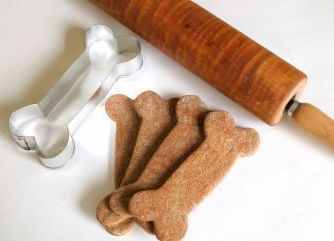
Homemade Dog Treats

Peanut Butter Dog Treats
• 2 tablespoons corn oil
• 1/2 cup peanut butter
• 1 cup water
• 1 cup whole wheat flour
• 2 cups white flour

Preheat oven to 350°. Combine oil, peanut butter and water in a bowl. Add Flour 1 cup at a time, then knead into firm dough. Roll dough to 1/4 inch thickness and cut with small bone shaped cookie cutter. Bake at 350° for 20 minutes. Makes 2 1/2 dozen.

via

Frog Toy

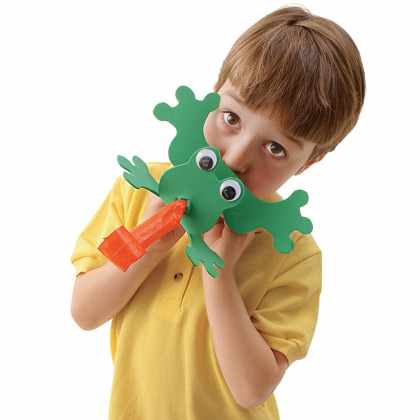
Make this cute Frog Toy!

All you’ll need is:

Green Foam (foamies)

Goggly Eyes

Craft Glue

Red Party Blower

Cut, glue, insert blower and you’re done!

for complete instructions and pattern, click here

Tell the Difference Between Gators and Crocs

1 Alligators and crocodiles are both reptiles. The reptile order “crocodylia” encompasses all the known alligators, crocodiles, and caimans, sorted into about 25 different species (including yet a fourth type of chomping creature, the endangered gharial). Alligators and caimans belong to their own family in the Crocodylia order (called, conveniently enough, “alligatoridae”) while crocodiles are in the “crocodylidae” family.

2 It’s all in the snout. As a general rule, alligators have shorter, blunter, heavier heads than crocodiles, which have long, tapered snouts lined with sharp teeth. It’s unlikely that you’ll ever venture close enough to take a look, but a crocodile can also be distinguished by the way its upper and lower teeth stick out past its closed jaws (a closed-mouthed alligator is much less toothy-looking).

3 You’re much more likely to encounter an alligator than a crocodile. In the U.S., the croc is an endangered species, numbering less than 1,000 individuals. By comparison, alligators are thriving, with over 1.5 million of these critters living in the swamps of the southeastern U.S. (By the way, alligators are only found in North America and parts of China; everywhere else, it’s all crocs and caimans).

4 Alligators prefer fresh water. Though you wouldn’t ordinarily describe Okefenokee Swamp as “fresh,” it’s a low-sodium paradise compared to the salty abodes of crocodiles (crocs can tolerate these conditions because they have special glands in their mouths that filter out excess salt). Some alligators can also tolerate a certain amount of salinity, but prefer to stay in fresh water.

5 Crocodiles tend to be bigger (and more aggressive) than alligators. No one would describe a swamp alligator as “gentle,” but it’s a positive sweetheart compared to your typical Nile crocodile, which grows to a larger size and is much more active in pursuing its prey. For comparison’s sake, the biggest American alligators attain a length of about 14 feet, snout to tail, while the largest crocodiles are a whopping 20 feet long.

via