Category: Buy it
10 Ways to Cut Your Food Bill
1. Plan Ahead
Before you plan out your menus for the week, check the store ads to see what’s on sale. Base your meals on this. If there’s a recipe you’ve been dying to try out but the ingredients are not on sale, just be patient.
When menu planning, remember that your leftovers can be incorporated into other meals. Your leftover vegetables can be added to soup, or your leftover grilled chicken can be a delicious salad topper. Throwing away leftovers is like throwing away money—use them wisely!
If you go into the store without a shopping list, you’re more likely to impulse shop. Unnecessary items only add to your grocery bill, and usually not your meals. So make sure you have a complete shopping list, including the snacks and drinks you’ll be buying. Try to stay on track and avoid the displays at the end of aisles. They usually have great sale items, like tortilla shells, but are displayed with full-price items, like taco sauce, seasoning, chips, and salsa, that you might feel compelled to buy to complete your taco dinner.
 2. Be Savvy with Coupons
Jenny Martin, coupon whiz and creator of Southern Savers, a Web site dedicated to couponing, believes that you should never buy an item at full price. With the constant flow of coupons, sales, and discounts, you should only buy an item at its “rock-bottom low price.” “It’s a learning process,” she says, “but once you buy a jar of pickles for 10 cents, you’ll never be able to go back to full price.”
Start off by collecting coupons. 88% of coupons are in the Sunday paper, and since no other days have coupons, start your search there. You can also find printable coupons online at RedPlum, SmartSource.com, and Coupons.com. If you call a manufacturer and say you’d like to try a product and would like a coupon, they will sometimes send one to you. Also, sign up for store and manufacturer newsletters and check their Web sites for coupons.
Once you collect your coupons, you can go ahead and use one on an item you need right away, but the trick to saving the most money is to double up your coupons, or even triple up, and use them when the item goes on sale. Most stores will allow you to combine a store coupon with a manufacturer coupon. This way you’ll be able to purchase the items at their “rock-bottom low price.”
 3. Buy Generic
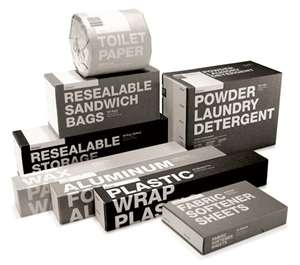
Most of the time the only difference between brand-name products and store-brand products at the grocery store is the packaging. Look beyond the label and compare the ingredients. You’ll find that most of the time the ingredients are the same, but the price is different. So don’t just grab the brand you recognize. Do a little research to find the best deal for practically the exact same thing.
4. Eat Healthier
By simply reducing your portions you can save a lot of money. Start by using a salad plate as your dinner plate. There’s a greater tendency to serve larger portions on bigger plates because of the empty space. Once you get used to the portion sizes of the smaller plate, you’ll then know how much you need to buy at the grocery store. The USDA recommends that a serving of meat should be 2 to 3 ounces, or the size of a deck of cards. A serving of fruit or vegetables should be the size of your fist, and a serving of rice should be the size of a cupcake wrapper. Keep this in mind when purchasing your groceries.
Don’t buy calorie-packed food that has little nutritional value. Stick to foods that will fill you up but aren’t loaded with sugars such as sodas and bakery items. Fruits and vegetables are full of fiber and water, which will keep you full, but won’t add many calories. Beans are another great option because of their fiber content.
5. Buy Produce In Season
While blueberries make for a delicious addition to yogurt and cereals, and squash would be an easy side to whip up for a weeknight meal, they aren’t always in season. Buying produce out of season is much more expensive because of the greater cost and effort in production. Determine what produce is in season and buy accordingly.
6. Don’t Always Buy Fresh Produce
When produce is out of season, buy it frozen, canned, or dried. It usually costs less than fresh produce and has the same nutritional value. While fresh produce usually loses some of its nutritional value in transit, vegetables, for example, are frozen at their peak of ripeness when they have the greatest nutritional value.
7. Buy “Must-Go” Foods
Don’t mistake these discounted “must-go” foods as expired food. Grocery stores usually mark down dairy products, baked goods, produce and meat as they get close to their sell-by date, not after they have reached that date. These discounted items are still perfectly safe for you to purchase. Ask your store when they mark down these items and you can plan your produce shopping in advance.
8. Check Unit Prices
Just because a product is cheaper doesn’t always mean you’re getting the best value. Check the unit prices (the cost per ounce or per pound) when comparing products to see if you’re getting the best value. If the unit price is not listed, simply divide the total cost by the number of units.
 9. Watch the Register
Prices are constantly changing at the grocery store. Diligently watch the register to make sure you’re getting the advertised price for each item. Policies vary, but some stores will give you an additional discount or even give you the item for free if there is a pricing error.
 10. Plant a Garden
Growing your own produce can really help you save money at the grocery store. Take herbs, for example. A pack of herbs from the grocery store can cost anywhere from $3 to $6 and you can use the pack for one, maybe two meals. Potted herbs, on the other hand, cost from $2.50 to $4 and they last for about eight months. via
Money Etiquitte Issues
Problem: Friends or coworkers who need to reimburse you for a group gift keep saying, “Yeah, I’ll get that to you,” and never do. What should you do?
 Solution: Send an e-mail reminding everyone that you’re collecting and would appreciate it if they’d get their share to you by a specific date, suggests Susan Hackley, the managing director of the Program on Negotiation at Harvard Law School. “If people still haven’t paid within a week, another pleasant e-mail―appreciatively noting the names of those who have paid―is perfectly appropriate,” says Hackley. If only one or two people haven’t chipped in yet, talk to them privately, says Spizman. “Ask if they sent it and by chance you didn’t receive it―don’t be accusatory. They really might have forgotten,” she says. It’s also possible that they’re short of money. In that case, you could compromise and say you’d be willing to accept whatever they can manage. If this puts you in a bind, you might ask some other group members (without revealing intimate details) if they’d consider chipping in a few extra bucks, since the group ran short.
CLICK HERE for 10 other money etiquitte issues.
Floral Lights

Materials: Stranne Standard Light,Thin card, scissors, glue and punch
Description: Old lights remodelled into a flower light. WIP at the moment. Thin card layered flowers cut from hand and then added to each of the tiny lights. Remove the bulb push on the flower and then screw the bulb back into the holder. Can’t be too thick as the bulb won’t go back on and connect.
Cat Shelf Hack
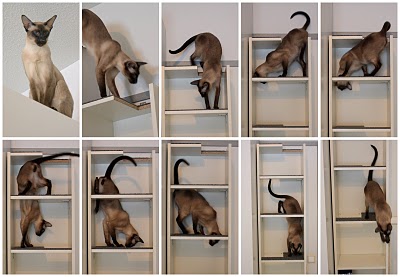
“I made an Ikea hack of my own a few weeks ago and thought you’d like to share it too. The shelf is made from a 40cm wide Billy shelf and it cost only 15€ (the shelf was a bit damaged at the store but it suited our purpose fine) and 5€ for the carpet (so that it’s not slippery). We also added a few corner irons and bolted the shelf to the wall so it wouldn’t fall when our cats play in it. …
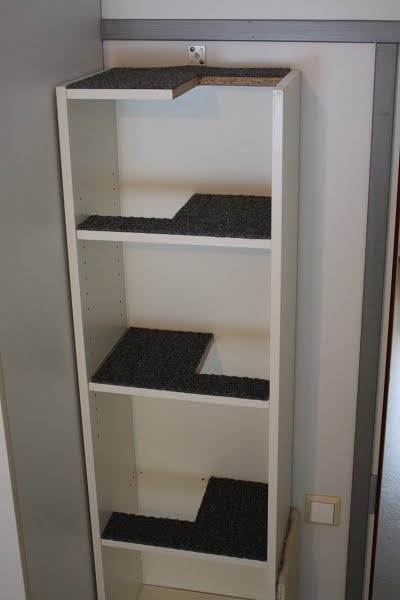
40cm wide might be a bit too small for most cats but not for this breed. The shelf fits in the tiniest area, providing our cats access to the top of a closet with minimal damage to the walls of our rented appartment. The pics propably say more than a thousand words about how the shelf was altered, but I must say that we did use a lot of glue on the boards so they wouldn’t flip (in addition to the corner irons).”
more info via
 Do It And How