
Category: Did You Know?
Did You Know: Egg Shell Uses
Fertilizer
Did you know that eggshells are predominately made of calcium carbonate — the active ingredient in lime — as well as other nutrients for plants? Eggshells make a great natural fertilizer of sorts. Whether you break the shells up and sprinkle them on top of a plant, or mix a few into potting soil, your plant will thank you.
Coffee Or Tea Stain Remover
Do you have a cup or travel mug that has been stained by your favorite warm beverage? Grind up some eggshells and drop them in the drinkware filled with warm water. Let it sit over night, and the egg shell will absorb the stain.
Seed Starter
Remember how we said that egg shells make great fertilizer? Use egg shells to start seeds. Fill the egg shell half with soil and the seed, then plant directly into the ground (or into the pot). As the plant develops and the shell breaks down, it provides the seedling with plenty of nutrients.
Sidewalk Chalk
For whatever reason, everyone loves drawing on the sidewalk (or driveway) with chalk. Did you know that you can use egg shells as part of the recipe for an easy-to-make sidewalk chalk? Suite 101 has a really simple recipe that you can make with your kids.
Slug Repellant
Summertime is slug time. If you don’t want them around your garden (and who does?) simply sprinkle crushed eggshells around gardens and pathways. Slugs won’t cross the crunchy barrier.
What Are You Doing Tonight?
Never a Dull Date website has tons of great ideas. Check it out – great for couples starting out or long time couples. Here’s a sample:
Lucky in Love – Casino Date Idea
Posted by: Ashley April 22nd, 2012

Last Saturday night we decided to add a little excitement to our date night – and took a trip into Niagara Falls to the casinos!
While I am certainly not a gambler, I’ve always been a little fascinated by casinos. The bright lights, ringing bells, the drinks – it’s all very exciting! Anything can happen!
Car Tips
Sometimes Reddit will have a handfull of just really good tips. Check out these:
- Buy the right vehicle. Full sized pickups and Japanese (or 2000 and newer Korean/American) 4-cylinder cars typically cost the least to maintain. The fewer options the better (the more features your car has, the more potential failure points). Sports cars and luxury SUVs cost the most to maintain.
- Buy good tires. A cheap tire might cost $60 installed, will ride terribly, not be as safe and only last 30,000 miles. A good tire might cost $120 installed, but it will last 80,000 miles and be safer and more comfortable to boot.
- Don’t waste money on buying a higher octane gas than your car requires. Get into the habit of checking your oil level and tire pressure every fill up (or at least once a month).
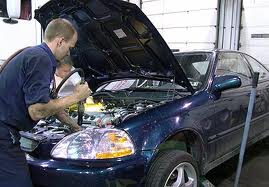 Don’t change your oil every 3,000 miles. Go open your owners manual and find the actual oil change interval (which is likely every 5k-10k miles). Instead of spending your money pouring cheap oil down the drain (figuratively), spend that extra money on good oil (full synthetic if you can afford it, if not then a brand name standard oil is perfectly fine). Rotate your tires at every oil change. Take a look at your brake pads while the wheels are off.
- The people at your dealership’s service department will look you in the eye and lie to you about what your 60K/75K/100K recommended maintenance is. Again, go to your owner’s manual (or here) and find out what your actual recommended maintenance is.
- When your brakes start squealing, it’s time to go get them looked at. Don’t wait 6 months until the squeal becomes a grind (at which point you have probably doubled the cost of repair by ruining your rotors).
- If you plan on pushing your car beyond the 150,000 mile mark, I recommend you replace your shocks/struts at 75k-100k. The purpose of shocks is to absorb energy. By keeping good shocks/struts on your vehicle you will extend the life of your tires as well as all the other bushings/ball joints/strut mounts that are way more expensive to replace.
- CV boots never need to be replaced. Ever. The theory behind replacing CV boots is that it will extend the life of your CV joints. The problem is that there is only a tiny (if any) difference in the cost of replacing the boot vs replacing the entire joint with a remanufactured one. If your CV boot is torn just live with it, and keep in mind that in another 60k miles your CV joint might go bad. Better yet, wait until you’re replacing your struts and replace the whole joint at the same time (which might save you money on install, plus you’ll only pay for 1 alignment). The only exception to this is if you need a good boot to pass inspection, then just throw one of those crappy split boots on there.
- Buy the best battery (longest warranty) you can afford. Avoid going to the dealership for this repair. You’ll probably get a better price and a better warranty at Firestone/Interstate/Wal-Mart/Sears.
- When you get your serpentine belt replaced (based on either scheduled maintenance or visual inspection) keep the old belt and store it on/under your spare tire. If your belt ever breaks in the boonies, an old belt is infinitely better than no belt.
- Prematurely replacing your air filter will not save you money on gas. (Excluding diesels and carbureted engines) your air filter in no way affects your vehicles fuel economy. It will affect your engines performance at WOT and the ability of the filter to trap particles. Every 30k miles will be sufficient for most vehicles (15k in the desert).
- Check here to determine if your car is equipped with an “interference engine.” In this type of engine, a timing belt (cam belt) failure can do very serious damage to your vehicle. This is one of the few maintenance items that I would recommend doing ahead of schedule, because the risk of failure is moderate and consequence is high. IMO, if your car is out of warranty and you haven’t replaced your timing belt yet, you need to do it pronto.
Keep Cookies and Pastry Fresh Longer
If you need to store cookies or pastries for a few days in a tupperware or other type of container, to prevent them from getting dry and brittle, put a piece of bread in the container right along with the cookies. It will keep them very soft and moist. Sometimes, if you burn the cookies a little and they seem very tough and crunchy, leaving them in a container with the bread over night will actually soften them up and make them better than when they came out of the oven! via
WHY? It’s caused by osmosis. The moisture in the bread (which is a moister environment) moves into the cookies (a dryer environment) until it reaches equilibrium (same amount of moisture in both environments) via

