1. Get the stinger out quickly !
!
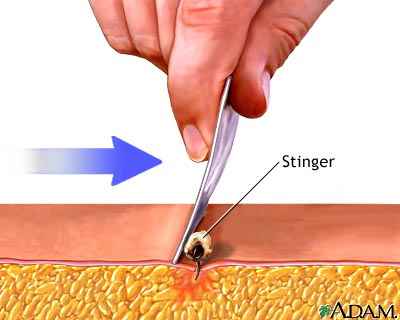
First you must find the stinger, look for a raised red welt on the skin of the victim. Now look very carefully for a small black dot in the center of the welt, it will look rather like a very tiny splinter. If the victim has been stung more than once, continue checking all of the welts until you find the stinger, or stingers.
After you have quickly located the stinger, pull it out as quickly as possible use either tweezers, or a stiff, flat object, such as a credit card, and pull or scrape out the stinger. This is imperative to get the stinger to quit pumping venom into your system.
2. Check for allergies !
!
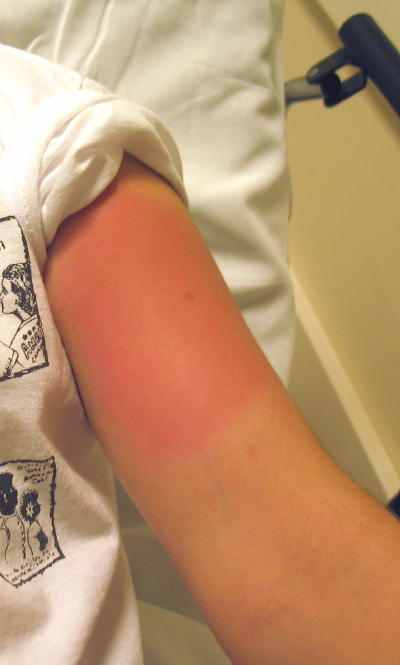
If you are just a by-stander here, be sure to ask the stinging victim if they have allergic reactions to bee stings. If so, find out if they have a bee sting or anaphylaxis kit. Generally people that are allergic to bee stings carry one of these kits fairly close by. If a kit is available, follow the instructions which will be displayed on the kit. If no kit is available, immediately call an ambulance. It is better to call an ambulance instead of trying to get the victim to the hospital yourself, unless of course you are within minutes of a hospital. The paramedics on the ambulance will be able to give medication to the victim immediately.
3. Treat the sting !
!

You will first want to wash the area gently with soap and water, if available. If you are not near soap and water, see if someone has a first aid kit. If so you can use an alcohol swab to sterilize the sting area. You now will want to add cold compresses to the area to reduce the swelling. There are also some home remedies that will help take the “sting” out of the sting. Such as, making a paste of baking soda and water, then apply this to the welt. I have heard of people using toothpaste, meat tenderizers and raw onion slices on the sting.


 Do It And How