Category: Wear it

Can Purse

Soda Can Purse

Supplies Needed:

  • Soda Cans
  • Stapler & Staples
  • Purse Template
  • Knife & Scissors
  • Ruler
  • Copier
  • Naugahyde or Similar Fabric
  • Glue
  • Wire
  • Nail or Hole Punch

Step 1 –
Trace out a purse shape (including the handles) onto paper, you just need the two large sides. Then, on the template draw squares & rectangles within the purse outline using your ruler.

Step 2 –
Next, number each square & rectangle shape and make a copy of the paper. Cut one of the drawings up, so now you have a bunch of numbered shapes. The other sheet will serve  as a master copy of how the shapes went together.

Step 3 –
Then, take a bunch of soda cans, clean them and cut the tops & bottoms out of them with a knife and then regular scissors. When complete you will end up with sheets of the aluminum can.

Step 4 –
Trace the cut out shapes onto the cans. Then cut out the shapes leaving about quarter on an inch (maybe 5-7 millimeters) edge. To make it easy, write the corresponding number on each piece. If you are using a variety of sodas, make sure to think about the color combination and layout when you are cutting out pieces. Then folded the edges under, to hide the sharp edge of the can. You can use a ruler to help you.

Step 5 –
Next, arrange the shapes back into the purse template and use a stapler with regular staples to join the can pieces. You want to make sure the stapler can reach each piece to connect it, so be sure to begin joining the cans together from the middle and work your way out. Remember, the can pieces are not overlapped but side by side.
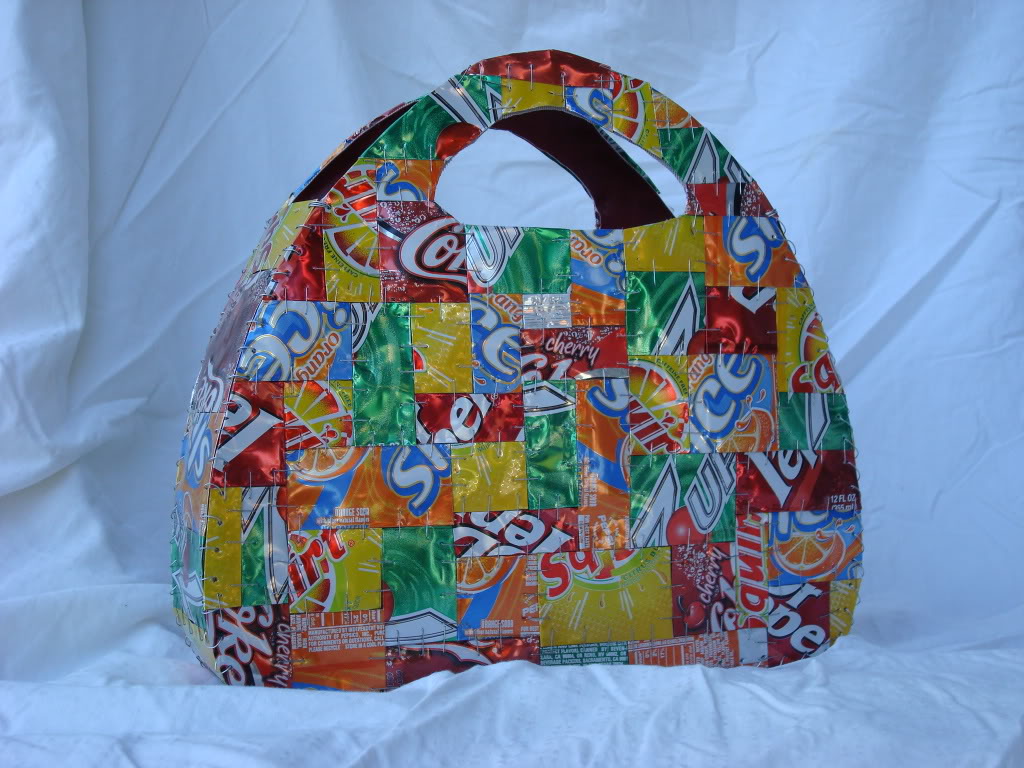
soda can purse side view
Step 6 –
For the bottom and sides of the purse, created one long strip of soda can pieces.

Step 7 –
After you have all three pieces of your purse, trace out the purse shapes onto naugahyde, or some sort of vinyl or pleather would probably work fine, just as long as its durable. Then, glue the material onto the soda can purse shapes.
soda  can purse close up
Step 8 –
Then take a small nail and punch holes at regular intervals around the edges of the purse forms. Then take wire and lace all three pieces together.

Now, you’re ready for a night out on the town!

via

Did You Know? Plants are Made into Clothes

Ok– I know you’ve seen the label that says 100% cotton. But there are other plants that are used to make fabrics too. Here are some interesting facts about cotton and some others.

Cotton

  • Cotton comes from plants that produce seed pods filled with ball-shaped clumps of cotton fiber. The seeds are separated from the cotton fiber mechanically. The process continues by spinning threads from the remaining, seedless white fiber. The threads are then woven to make cloth, which can be dyed. Cotton was grown in Pakistan’s Indus Valley more than 5,000 years ago. Cotton was grown and used to make clothing in ancient Egypt. Cotton plants were exported to the Southern United States in the 17th century.

Flax

  • Flax grows to a height of 4 feet and has leaves that consist of long, tough fibers. Flax has been used since ancient times to make clothing. The ancient Egyptians used flax to create linen cloth more than 4,000 years ago, and it was used in Medieval Europe to make cloth. Flax is still used to make fabrics for clothing, and it is commonly blended with synthetic materials and wool to add strength to fine yarns.

Hemp

  • Hemp comes from the Cannabis sativa plant and has been used to make cloth since ancient times. In the 1980s, producers were able to make fine cloth suitable for clothing from hemp. This development occurred following the discovery of a process using enzymes that removed the fibers’ roughness while still allowing the fiber to retain its durability. Designers currently use hemp, blended with other textiles, to make fine cloth, in contemporary designs. Hemp fiber is resistant to stretching, which allows clothes made from cloth woven with hemp fibers to retain their shape and size. Hemp typically grows in warm climates, such as those found in tropical regions.

Ramie

  • Ramie is grown in East Asia, and is known as China grass. Ramie fibers have been found in fabrics used to wrap mummies in ancient Egypt. Ramie fibers are fine and produce delicate silk-like threads when spun, although the fibers can become brittle when a dry process is used to spin them. Cloth made from Ramie is resistant to stain and has a slight sheen that reflects light. Ramie fabrics are also used in the manufacture of garments because the cloth does not readily shrink.

via