Month: June 2012

Car Tips

Sometimes Reddit will have a handfull of just really good tips. Check out these:

  1. Buy the right vehicle. Full sized pickups and Japanese (or 2000 and newer Korean/American) 4-cylinder cars typically cost the least to maintain. The fewer options the better (the more features your car has, the more potential failure points). Sports cars and luxury SUVs cost the most to maintain.
  2. Buy good tires. A cheap tire might cost $60 installed, will ride terribly, not be as safe and only last 30,000 miles. A good tire might cost $120 installed, but it will last 80,000 miles and be safer and more comfortable to boot.
  3. Don’t waste money on buying a higher octane gas than your car requires. Get into the habit of checking your oil level and tire pressure every fill up (or at least once a month).

  4. Don’t change your oil every 3,000 miles. Go open your owners manual and find the actual oil change interval (which is likely every 5k-10k miles). Instead of spending your money pouring cheap oil down the drain (figuratively), spend that extra money on good oil (full synthetic if you can afford it, if not then a brand name standard oil is perfectly fine). Rotate your tires at every oil change. Take a look at your brake pads while the wheels are off.
  5. The people at your dealership’s service department will look you in the eye and lie to you about what your 60K/75K/100K recommended maintenance is. Again, go to your owner’s manual (or here) and find out what your actual recommended maintenance is.
  6. When your brakes start squealing, it’s time to go get them looked at. Don’t wait 6 months until the squeal becomes a grind (at which point you have probably doubled the cost of repair by ruining your rotors).
  7. If you plan on pushing your car beyond the 150,000 mile mark, I recommend you replace your shocks/struts at 75k-100k. The purpose of shocks is to absorb energy. By keeping good shocks/struts on your vehicle you will extend the life of your tires as well as all the other bushings/ball joints/strut mounts that are way more expensive to replace.
  8. CV boots never need to be replaced. Ever. The theory behind replacing CV boots is that it will extend the life of your CV joints. The problem is that there is only a tiny (if any) difference in the cost of replacing the boot vs replacing the entire joint with a remanufactured one. If your CV boot is torn just live with it, and keep in mind that in another 60k miles your CV joint might go bad. Better yet, wait until you’re replacing your struts and replace the whole joint at the same time (which might save you money on install, plus you’ll only pay for 1 alignment). The only exception to this is if you need a good boot to pass inspection, then just throw one of those crappy split boots on there.
  9. Buy the best battery (longest warranty) you can afford. Avoid going to the dealership for this repair. You’ll probably get a better price and a better warranty at Firestone/Interstate/Wal-Mart/Sears.
  10. When you get your serpentine belt replaced (based on either scheduled maintenance or visual inspection) keep the old belt and store it on/under your spare tire. If your belt ever breaks in the boonies, an old belt is infinitely better than no belt.
  11. Prematurely replacing your air filter will not save you money on gas. (Excluding diesels and carbureted engines) your air filter in no way affects your vehicles fuel economy. It will affect your engines performance at WOT and the ability of the filter to trap particles. Every 30k miles will be sufficient for most vehicles (15k in the desert).
  12. Check here to determine if your car is equipped with an “interference engine.” In this type of engine, a timing belt (cam belt) failure can do very serious damage to your vehicle. This is one of the few maintenance items that I would recommend doing ahead of schedule, because the risk of failure is moderate and consequence is high. IMO, if your car is out of warranty and you haven’t replaced your timing belt yet, you need to do it pronto.
Friendship Circle T-shirt

Before Meeting Prep: Wash T-shirts with no fabric softener. Purchase or gather:

  • acrylic paints – 1 color for each girl. and foam plate to pour paint onto.
  • Foam brushes to apply paint to hands.
  • You’ll also need fabric medium to mix in with the acrylic paint.
  • Bottle(s) of fabric puffy paint, to later add names and troop number.
  • A piece of cardboard to insert between layers of shirt, so you dont get bleed through (you could use newspaper too).
  • a disappearing fabric marker or pencil.
  • And a dinner plate to trace a circle as a guide for the handprints.

Prep shirts at the meeting by inserting the cardboard and draw on a circle with the fabric marker using the plate as a guide. Lay out the shirts at one side of your meeting place. Select girls to come over one at a time. Have another activity going on with your co-leader at other side of group. Let each girl choose their color and give them a little bit of paint and fabric medium to stir together (according to fabric medium package instructions). Apply the paint to one hand and using the circle as a guide press down on the shirt. Do every girl’s hand for each shirt. After all have been printed, and mostly dry – add the names to the hands and “Friendship Circle” in the middle, and your troop number at the bottom. Makes great shirts for those times the girls aren’t wearing the full uniform, but want to look like a troop!

Do this craft in accordance with learning the Girl Scout Friendship Circle:

Meaning: The friendship circle is often formed at the end of meetings or campfires as a sort of closing ceremony. Everyone gathers in a circle where they cross their right arm over their left in front of them and hold hands with the people on either side. Once everyone is silent, the leader starts the friendship squeeze which is passed from hand to hand. Often the girls will make a wish after their hand has been squeezed before they pass the squeeze along. Also, in some larger groups, the girls put their right foot out into the circle when they receive the friendship squeeze, so that everyone can see it travel along the circle.

Mini Taco Pizzas

Ingredients

3-4 Large whole wheat tortilla’s, or enough to cut out 12 small circles (I prefer low carb/high fiber tortillas)
1 cup Lean ground turkey, cooked (or lean ground beef or 1 cup Morning Star Meatless Crumbles™)
1/2 cup Salsa of choice (I used one with corn)
2 tsp Dry taco seasoning
1/2 cup Low fat refried beans
1/2 cup Low fat shredded mexican blend or 2% cheddar cheese
Optional Toppings: sliced black olives, shredded lettuce, low fat sour cream, chopped tomatoes

Preheat oven to 425 degrees. Spray a 12 count muffin tin with non-stick cooking spray.

Start by laying each tortilla out individually on a flat surface, and use an empty can, glass cup, or cookie cutter to cut 3-4 medium circles out of each wrap.

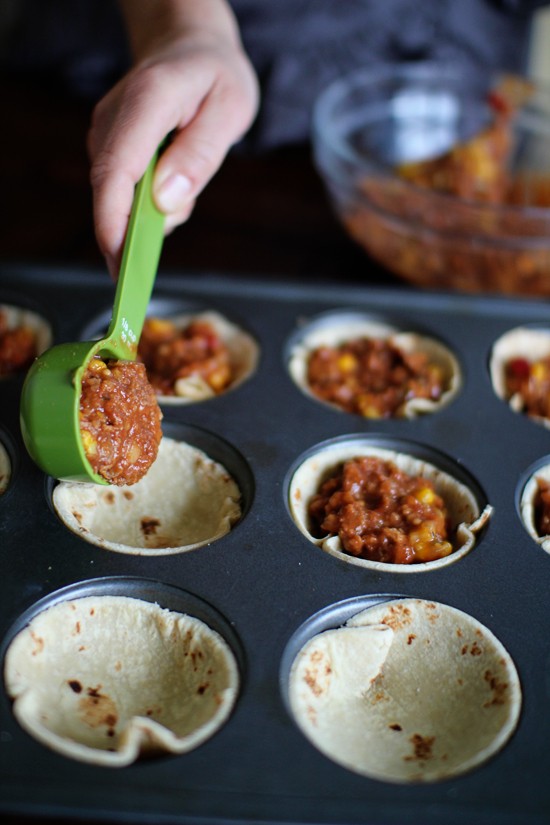
Press each wrap circle into muffin tin using your fingers. (Note: it doesn’t have to cover the entire side of the tin, it should just fit snuggly!)

Meanwhile, in a small bowl, mix together the ground meat, salsa, taco seasoning, and refried beans. Stir until well combined.

Scoop 1/8th cup of meat mixture into each wrap.
 
Top with shredded cheese, (dividing evenly between each pizza), and olives if desired.
 
Bake in pre-heated oven for 12-15 minutes, or until cheese is melted.
 
Wait for mini pizzas to cool, and remove from muffin tin using a fork or knife. Pizza’s should pop out with ease!
 
Serve with a side of salsa, low fat sour cream, chopped tomatoes, and/or shredded lettuce if desired! via

Best Cookie Dough and Secrets Ever!

This is by far one of the most interesting and well written blog entries I’ve seen lately and also dear to my heart; because I too, like the author, have a cookie dough eating problem. I hope you enjoy and click HERE for the complete article and more!

Secret 1: The use of a mix of cake flour and bread flour. Cake flour is finer, and bread flour has gluten, both important. Use them and no other.

Kate: I’m fairly certain this is one of the keys to this recipe being so great. It took me ages to find cake flour at my huge grocery store as it’s not super popular and they hid it on the top shelf that I had to have someone help me get down, but dig dig dig as it’s necessary!

Secret 2: Chilling. This is key — KEY! — to cookie texture success. The reason is that letting the dough rest allows all the eggs and the butter and the liquids to ooze and soak and hydrate into all the dry goodness. 24 hours is minimum, 36 is preferable (and noticeably better).

Also, the flavor gets crazy! Deep, caramel-y, toffee-y, and they bake up so much more deliciously brown. Plus, it lets the outside get crisp and crackly and keeps the middle almost underdone when you pull them out — they set up and turn into soft, chewy heaven.

Kate: I baked one batch after only four hours of chilling and they were great – like SO great people begged me for the recipe at the potluck. Then I tried 12 hours, 24 hours, and 36 hours. While 36 was DEFINITELY in-freaking-credible (so true about the caramel-y-ness), if you can only wait four hours, it won’t be the end of the world. This also makes SO many cookies that you could make half and then half later, like I did.

Secret 3: All ingredients. Room temperature. Do it. (Note: The misconception with room-temperature butter: it actually doesn’t mean letting it sit out until it’s supersoft and melty. You should be able to press a slice of butter with your finger and easily make a dent, and it should crack faintly.)

Secret 4: Did you know? People make their cookies way too small! It’s silliness! If you make them too small, they dry out too quick, and they get too crunchy. We want gooey and chewy! The way to achieve that is to scoop your dough out into golf-ball sized — or slightly larger — portions. I use a 1/3 c measuring cup for extra big cookies.

Secret 5: The chocolate. Sorry, Toll House. And don’t even think about the generic supermarket brand. I only use Ghiardelli 60% Cacao chips — they’re pretty widely available the best chips you can buy at a grocery store. However, if you run across anything that is 60% cacao, it’ll be good.

Secret 6: The sprinkle of salt on the top. Makes all the sweetness sing.

Secret 7: Wait. I mean, sure, have one piping hot out of the oven, but the flavors actually meld and deepen once they cool. These are definitely cookies that get better the next day.

Secret 7 1/2: Always err on taking them out too early rather than too late – also essential for middle-softness. They continue to cook on the sheet for a few minutes, so don’t overdo it – underdone is better than overdone, every time (and you can always pop them in for a minute more if you like).

Stick to these secrets, and you will ace chocolate chip cookies forever.

2 cups minus 2 Tbsp. (8 ½ oz.) cake flour
1 2/3 cups (8 ½ oz.) bread flour
1 ¼ tsp. baking soda
1 ½ tsp. baking powder
1 ½ tsp. coarse salt, such as kosher
2 ½ sticks (1 ¼ cups; 10 oz.) unsalted butter, softened
1 ¼ cups (10 oz.) light brown sugar
1 cup plus 2 Tbsp. (8 oz.) granulated sugar
2 large eggs
2 tsp. vanilla extract
1 ¼ pounds bittersweet chocolate chips or chunks, preferably about 60% cacao content, such as Ghirardelli
Sea salt or kosher salt for garnishing

Combine flours, baking soda, baking powder, and salt in a bowl. Whisk well; then set aside.

Using a mixer fitted with paddle attachment, cream butter and sugars until very light and fluffy, about 3 to 5 minutes. Add the eggs, one at a time, mixing well after each addition. Mix in the vanilla. Scrape down the sides of the bowl with a rubber spatula as needed. Reduce the mixer speed to low; then add dry ingredients, and mix until just combined. (Unless you have a plastic guard that sits around the rim of the bowl, this will make a big mess at first, with flour flying everywhere. I found that carefully holding a dish towel around the top of the bowl helped a lot.) Add the chocolate chips, and mix briefly to incorporate. Press plastic wrap against the dough, and refrigerate for 24 to 36 hours. The dough may be used in batches, and can be refrigerated for up to 72 hours.

When you’re ready to bake, preheat oven to 350°F. Remove the bowl of dough from the refrigerator, and allow it to soften slightly. Line a baking sheet with parchment paper or a nonstick baking mat.

Using a standard-size ice cream scoop – mine holds about 3 fluid ounces, or about 1/3 cup – scoop six mounds of dough onto the baking sheet, making sure to space them evenly. Sprinkle lightly with sea salt, and bake until golden brown but still soft, 15 to 20 minutes. Transfer the baking sheet to a wire rack for 10 minutes, then transfer the cookies onto the rack to cool a bit more.