Category: Scout Meeting

Quiet a Fussy Baby

Is your baby crying because he is hungry? If your baby is fussing and rooting around with his mouth looking for a breast or bottle, he is probably hungry. If you are not sure, try feeding him. If he takes a few sips and then wriggles away, go on to the next step.
Is your baby crying because she has a wet or dirty diaper? This is probably the second most common reason for a baby to cry. Check your baby’s diaper and change it if necessary. If the diaper doesn’t stop the baby from crying, try the next step.
Is your baby crying because he is too hot? New parents feeling cautious and protective tend to overbundle babies. If your baby is wearing more layers than you, try removing a layer, or extras such as his cap, mitts or booties. On the other hand, if your house is really chilly, make sure he is not crying because he is too cold. If temperature is not the reason your baby is crying, it’s on to the next step.
Is your baby crying because she’s uncomfortable or ill? Check to make sure your baby is not lying on anything and her clothing is not too snug or turned funny (sideways pajama bottoms would make you cranky, too!). Does your baby prefer to be swaddled, but she’s come unwrapped? If everything checks out, look for signs of illness or teething. Does she have a temperature? Does she bear down on your finger with her gums? Does she have a runny nose, cough or other symptoms? Some baby Tylenol and a call to the doctor might be in order. But if she seems fine, consider the next step.
Is your baby crying because he is overstimulated? If your baby has spent a long period of time in a new or different environment or around a lot of people, lights, or noise, he may be crying because he needs a break. Remember, this world is brand new to your baby so give him time to take it all in. If your surroundings have not changed, on to the next step.
Is your baby crying because she is colicky or gassy, or just tired? If your baby ate recently, see if she needs to burp. Sometimes one good belch is all it takes. If you suspect colic, there are many safe home remedies you can try. White noise, the sound of a fan, a washing machine or a radio dial set to static, sooths some colicky babies. Warm mint tea is another colic remedy many moms report successful. If your baby is tired, she might cry as well. Try sitting with her in a dark, quiet room, holding her and rocking her. If this doesn’t work either, go immediately to the next step.
Ask for help. Let your spouse hold the baby for a while. Call Grandma to come and work her charms. Request assistance from your dear next door neighbor. If you are a sleep-deprived parent and your baby just won’t stop crying, you can feel overwhelmed. And guess what? Your baby might sense your frustration and stress and cry. Get off the merry-go-round and take a short, well-deserved break.

via


Balance Your Checkbook

Time Required: 10 to 30 minutes

Here’s How:

  1. Reconcile Your ChecksDetermine if there are checks that haven’t cleared the bank. Sort your cancelled checks in check number order, or use the listing of your cleared checks in numerical order shown on your statement. In your checkbook register, check off each cancelled check returned to you or each check that appears on the check listing, making sure the amount you recorded is the amount the bank shows.
  2. Reconcile Your DepositsMake sure each deposit shown on your bank statement is recorded in your check register (especially if you have direct deposit, which you can easily forget to record). Also, go through your deposit slips, paycheck stubs, etc., and make sure the bank statement shows all the deposits you made. Check off the deposits in your check register as you did for checks.
  3. Reconcile Your ATM Withdrawals and Debit Card PurchasesGo through the same process with your ATM withdrawals or debit card purchases, checking off each transaction on the bank statement in your check register. If the bank shows transactions that aren’t included in your check register, record them now.
  4. Record Interest Earned and Bank FeesCheck your bank statement for any other fees and record them in your checkbook register. Also record any interest earned in your checkbook register.
  5. List Outstanding ChecksNow go through your checkbook register and in column two of the balancing form list your outstanding checks (the checks that you did not check off in your check register as having cleared the bank), as well as any outstanding debit purchases or ATM withdrawals that have not yet cleared the bank. Total the column of outstanding checks, debits, and ATM withdrawals.
  6. List Outstanding DepositsGo through your checkbook register and in column one of the balancing form list the outstanding deposits (the deposits that you did not check off in your check register as having cleared the bank). Total the column of outstanding deposits.
  7. Record Your Bank’s Ending BalanceOn line one of the bottom section of the Checkbook Balancing Form, enter the ending balance shown on your bank statement.
  8. Enter Outstanding DepositsOn line two of the bottom section of the Checkbook Balancing Form, enter the total outstanding deposits from column one.
  9. Enter Outstanding ChecksOn line three of the bottom section of the Checkbook Balancing Form, enter the total outstanding checks from column two.
  10. Calculate Your BalanceUse a calculator to total lines one through three, as indicated by the plus and minus signs on the form, and enter the new total on line four. This should equal the balance shown in your checkbook register. If it doesn’t, check for math errors in your checkbook register, such as reversed numbers (e.g., $53 instead of $35), subtracting a deposit instead of adding it, adding a check written instead of subtracting it, automatic payments that you forgot to record, etc.

via

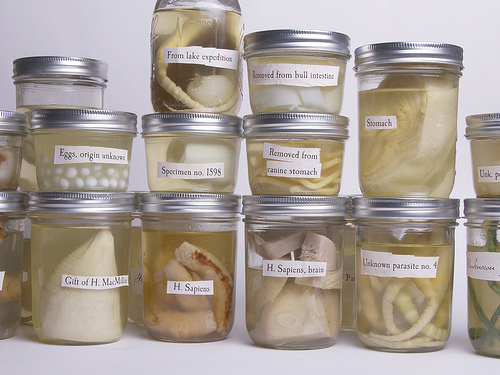
Edible Specimins

Before we begin, let’s be clear about what we’re trying to accomplish, with a few ground rules for the project:

1. What good is a specimen jar if you can’t serve it at dinner?The contents of the jars should be genuinely edible, made out of real food. Plastic snakes and spiders are right out.

2. Make it tasty. While the appearanceof the specimen jars may cause loss of appetite, the scent, by contrast, should be simply mouth watering. There are many ways to get there. Specimen jars can be prepared as an antipasto course (e.g., with preserved vegetables), as a soup appetizer, as a palate cleanser between courses, or a dessert course, depending on the ingredients chosen.

3. Work within the comfort zone of your guests. If your guests are super-omnivores, eager to eat the most challenging ingredients that you can get your hands on– whether that’s brains or balut or something far worse –then go right ahead. However, the point of this project is to make a dish that looks intimidating but actually consists of friendly ingredients. It’s possible to make a truly scary looking set of specimen jars that is (for example) strictly vegan or passes the even stricter dietary requirements that your child may present.

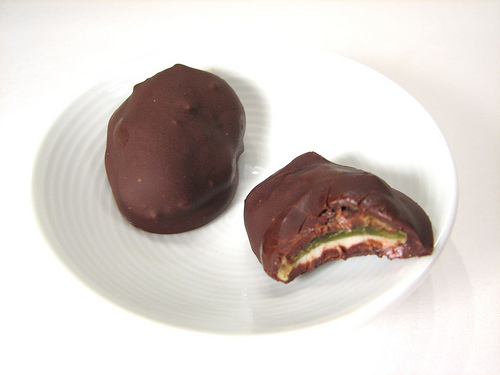
Chocolate Covered Frogs

They’re not REAL frogs….

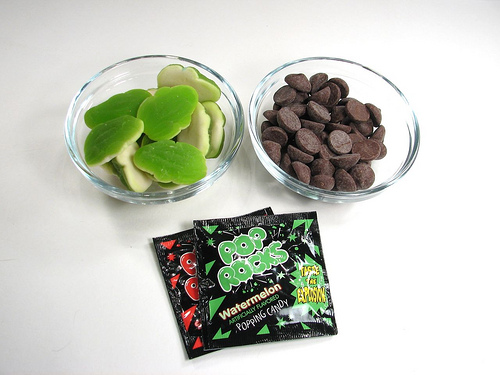
Melt your chocolate in a double boiler. It needs to be real, pure chocolate. We like Ghirardelli 60% bittersweet chips. They’re readily available, not too expensive, and have excellent texture. You’ll want just enough to coat your frogs. Too much chocolate with a finite amount of crunchy bits will leave a poor crunch density.

Add the Pop Rocks and stir them into the chocolate. Use lots of Pop Rocks; As many as you dare. They’ll crackle a bit when you stir them in, but don’t worry, there will still be plenty of crunch.

Coat your frogs and place them on parchment paper on a cookie sheet. A chocolate fork works great for this, but regular forks work, too.

Chill in the refrigerator until they solidify, preferably in a sealed container to prevent condensation issues.

great idea via

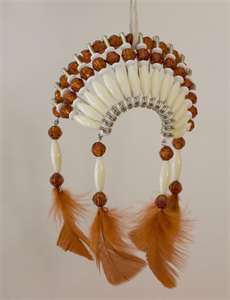
Native Headress Pin or Neckerchief

Materials:

  • 15 safety pins ( I used small brass ones )
  • “E” beads ( I used a variety of colors )
  • 6 mm round beads ( I used faceted ones )
  • approx. 8″ of 20 gauge wire
  • 1/2 pipe cleaner ( I used gold )

Instructions:

  1. String “E” beads on pin in desired pattern. Do 14 pins the same way. ( I experimented with different colors. Each of the above will represent a feather so you may want to use a pattern here. )
  2. Pinch heads of pin closed, so that they don’t open while wearing. IMPORTANT SAFETY FEATURE!
  3. String 6 mm beads and heads of pins on wire. Start with a bead and fold wire back over bead to keep it on. Alternate beads and pins, being sure to put all pins facing the same way. (This is where I created a pattern. Ex. blue faceted 6mm bead,1 pin w/red beads, blue faceted 6mm, 1 pin w/white beads, blue faceted 6mm, 1 pin w/blue beads, blue faceted 6mm, 1 pin w/white beads, blue faceted 6mm,1 pin w/red beads, etc…..) End with a 6mm bead, leave enough wire to fold back over bead as you did at start, then trim excess wire away. Be sure ends are folded back enough so that there is no sharp point.
  4. String pipe cleaner through loops at bottom of pins, pushing pins close together, and centering pipe cleaner.
  5. On ends of pipe cleaner string several beads, either “E” or 6mm. ( I used 3 blue faceted 6mm beads on each end) Form excess pipe cleaner into a loop, and twist to secure.
  6. Take your last pin and pin the first beaded pin and last beaded pin on the back of the slide. This will help to form shape, and is used to create area to put neckerchief through.
  7. Adjust shape, pull “tails” straight, then wear with pride.

photo is just for demonstration. Finished prject may differ. instructions via